
Phoebe Grigor films & stills
WINTERREISE
WINTER JOURNEY
24 images, for Liesl
Wheeling into this new year I have taken myself on a solo journey, in the stony heart of winter; alone for the very first time in 26 years, since I became a mother at the beginning of this century. For company I have taken three prime lenses and my headphones for a walk, collecting images along the edges, where city snags nature.
My family and I are making a trip to Vienna to visit the once home of my great-grandparents, Julius and Grete and their children, Lene, Liesl, Hansi. The house, boldly orthogonal, audacious, was recently restored by a foundation, and it is to open its doors in celebration of the architecture and to tell its story, including that of the family, my family, who lived there, all too briefly. I have only a few of those stories, and am learning more, thanks largely to the family albums of photographs that have survived.
Liesl Beer, photographer, mobility impacted by childhood polio, as I listen to Schubert’s ‘Winterreise’, I think of you. Your sister, my grandmother, the athletic, indomitable Lene, arrived in Scotland as a refugee, having narrowly escaped the Nazis. You wouldn’t live to know that she had two children and raised them in Glasgow with her husband Rudi before he died very suddenly. There is a photograph which I understand was taken just before he died, mid-joke, glass in hand, in the company of Lene and their great friends. Your sister then returned to Austria, meeting questions by insisting that her childhood memories, before the war and its horrors, and your disappearance, were all so very happy.
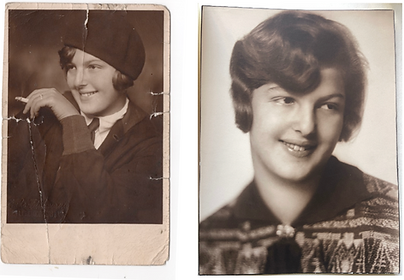
Did you photograph your mighty sister, hurdling, dressed in complicated layers of cotton- voluminously aiding her buoyancy? Were you there on that sunny sports day- did your parents perhaps have a camera? Somebody understood how to freeze the moment, mid-flight- when the poses of the day were typically static, to allow sufficient light to reach the film. Was it perhaps the eye of family friend and photographer Trude Fleischmann? She photographed you both so beautifully in her studio, reflecting familiarity, comfort in the exquisite sepia prints which survive.
From your niece, Barbara, we inherited a box containing albums of Trude Fleischmann’s portraits of her friends, our family, and of you, Liesl. And also Einstein, among other celebrated subjects. A photographer who established a studio in Manhattan, Fleischmann lived a long life, developing as an artist, in those decades that you should also have had. Your own work survives, shot perhaps and developed in the home your parents built. The portraits of you and by you can be seen side by side: your perspective, and that of Fleischmann. Did she influence you; did she perhaps encourage and teach you?
With my mother, with you and the whole family in mind, we are making a winter journey to visit your home. It opens its refurbished doors in March, renewed as a monument to the vision of the architects, who were commissioned by your father Julius Beer, and his wife Grete (née Blitz).
The doors closed with finality to your family, along with rising anti-semitism in Vienna, in the late 1930s, as the Anschluss loomed. Your father struggled throughout those years, his business was restructured and he was ultimately pushed out. His business and wealth were gone, and the temple he helped fund destroyed, November 1938, at the time of Kristallnacht.
Papers were available to those with money, with connections, with job offers. In Scotland, academics were welcomed without the need to adopt christianity, as demanded by English institutions (or so the Glasgow Holocaust archivist told me). Your sister and her husband Rudi made it to Glasgow, and lobbied for you to join them. Your parents and little brother settled in NYC and tried there to arrange your passage.
Did your family ever find out what happened to you? It's a question to which I have no hope of a definitive answer, and must have been the source of unimaginable pain for your parents. Your father died on the first day of 1941, as talk of the death camps circulated but were dismissed as Allied Propaganda. He is buried on Staten Island in a graveyard reserved for Jewish people without funds.
George told me that your sister and mother tried to establish your fate, but we don’t know what if anything they discovered. Decades on, I simply enter your name on an internet search, in exchange for a little personal data and there appeared the grim facts of your death. Name, dates, locations, listed dryly, along with so many millions of others. A specific address, even, of the place where you were picked up also listed- is this where you had hidden after your family had fled? Will we visit this corner of Vienna, long since redeveloped, or will we focus instead on the joyous life and art that flourished in the Villa Beer, your home?
Your images, left behind- a personal legacy of artistic potential. Perhaps it was the influence of your creative family and their circle that inspired you to take up photography; perhaps it was the ruling out of sports that your sister so enjoyed. She carried on playing golf in Scotland, and I remember her, in her 70s, helping to push the car that had seized up on our way back from Edinburgh one day. ‘Barr-barrra’ she would call, Rs rolling, always to me sounding like censure- I was a little scared of her, though I certainly scared easily. I am a photographer too, and though not as timid as in my days as a little sister, I do still better enjoy parties when I can frame them through a lens.
I found the receipt for my first camera- an Olympus AF-10 F3.5 25mm, not that those numbers meant much to me. Mum bought one for me and one for my sister Sarah, on her own birthday, in 1984- the year before your sister Lene died. I’m not sure I ever cleaned the lens, and it dangled on its cord as I danced and skipped blithely through my drunken teenage schooldays, and on family trips to the Galician farmhouse which my parents restored, just enough, to become a writing retreat. Lacking even the basic knowledge of the rules of exposure, this little camera did the thinking for me, and I have thousands of images- rare documents from the years before digital photography leaves so little undocumented. I recorded compulsively all the growing up I did alongside my friends and family. You photographed your family too, and caught Lene with a sister’s eye, your signature written below your portrait of her- it’s written with flamboyance. Is it a small moment of triumph over your older sibling?
I wish I had more photographs of my mum- but she was busily foregrounding the work of others- in the arts and in politics and in her communities both local and international. She was a low-key powerhouse, first teaching, fresh out of college, at the revolutionary school Summerhill, before taking up a post in Fife. She taught languages- spoke many, fluently, persuasively. Profoundly indispensable to us, and to the many artists whose work she championed and celebrated on film, in the world of public art, and in broadcasting in the UK and across Europe. A true internationalist and inspiration, who quietly moved mountains and was unthinkably gone at 50.
I’m listening to Winterreise as I write. There are 24 songs in the cycle. I am going to keep you in my thoughts, not that I know much about you, other than the dry facts of your health, your tragic death, and your photography. It was Kathi from the Villa Beer foundation who explained to me the conundrum as I saw it- why is Liesl’s name written below a portrait of Lene? ‘Liesl took the photograph’ she said; ‘she was a photographer, and her parents created a darkroom in the house’. How had I not known this? The 2nd generation, post-Holocaust, is asking a lot of questions, when those displaced and their children were too scarred to do so. Without our beloved mum here to fill in the blanks, we have are left still with more questions than answers.
The foundation acquired the Villa Beer in 2021, and made this discovery alongside many others, with the help of George, your nephew. I spoke with Rudi, George’s son, of the profound sorrow I had felt on learning the details of your murder. And because I had learned this in the process of applying for Austrian citizenship, along with the sadness came guilt. Guilt at the initial excitement of wriggling free of Brexit Britain with its delusional, true blue passport fever, and taking up the Austrian offer to all descendants of the victims of the Nationalsozialistische Deutsche Arbeiterpartei. I had to look that up as I speak no German, and am now, thanks to their war, an Austrian. Rudi, named after your brother-in-law, was surprised at my response. He too was intending to apply, but without the guilt I’d expressed: ‘thing is Phoebe, we’re Jewish- we need as many passports as we can get!’. We have met and spoken as adults only a handful of times, but religious differences aside, our humour is shared and I laughed a lot.
Did you take your camera outside? Amongst your photographs there is the odd image taken in daylight. I hope it was you who caught your sister flying over the hurdle. I hope that your camera helped you see the world on your own terms, framed just as you saw it. Click. Your parents set up a home gym for you next to the dark room, Kathi tells me. These work spaces of yours will soon open to the public, and the family story will be better understood.
There is a photograph, in 1970s Kodachrome, which I wish you could have foreseen in those darkest of months, as the war spilled across Europe; hiding while waiting for those papers to join your family in NYC or Glasgow. A faraway life in which you could have participated, brought your camera to witness, and lived.
Your sister, looking very much the Austrian, always elegantly coiffed and wearing clothes showing her Viennese roots- she would bring us dirndls and hope to see us too reflect her heritage.
Born in Scotland, in the 70s, my sister and I were temporarily relocated to Los Angeles, where we enrolled in school. The photograph is a group shot , taken perhaps by Murray, our dad, filmmaker and a brilliant photographer. He so brilliantly caught 70s life in the US that his images- our family albums- for me are up there with Eggleston. In the picture, Lene, Barbara, and wearing Disney T-shirts with personalised named t-shirts, Sarah and me- looking and sounding like Californians in the winter of 1978. 36 short years after you were gone in your 20s.
Your mother never revisited the house, which she had filled with the sound of her piano playing and her family. I will think of you as I measure the lengthening days of late winter, and record it with my camera. I will leave for you a box of these images, with permission of the Foundation, in a corner of your darkroom. I would also like to photograph your great niece, my sister Sarah, her daughter Luella, and my own children Stella and Sam, in the house where the possibilities of architecture, of music, and photography were so richly, so briefly explored. You would I hope be happy to know that we are- all of us- pursuing creative paths.
The cycle has just finished- the Gerald Moore and Dietrich Fischer-Dieskau performance, recorded in 1985. Looking over a loose translation of the German- I WILL learn the language, one day. I first heard this song cycle in a production at the Opéra Comique, which divided the Parisian audience. Staged by Christian Boltanski, whom I ran into here in Scotland 5 years ago. He had created sombre, choreographed scenes with the help of 3 actors, dressed drably, moving with care, and without expression. In one, each would bring a leather case on stage, emptying the contents, slowly, repetitively. Shoes and boots, tipped from the cases, creating a great pile on one side of the stage, and upended cases stacked on the other side, as the tenor and pianist performed the cycle. The music fused in my memory with the holocaust, separated in time though they are. The series of images are partnering in my head with these reflective songs, in these weeks before I visit your home for the first time. Translations of the simple titles vary, all of them sombre, shadowy. Schubert, gone so young in his early 30s, Müller, who wrote the poems on which the music was based, gone almost at the same age, within a year of each other. And now, a century on from the first performance, I wander with my camera, listening to the Winterreise, reflecting on your short life, of my mother, of loss, change, solitude and of the luxury of time that neither of you had, as I explore my 50s and the winter.


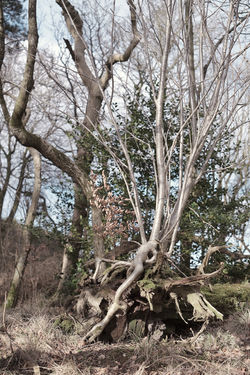 the hurdy-gurdy man |  spring dreams |  the weathervane |
|---|---|---|
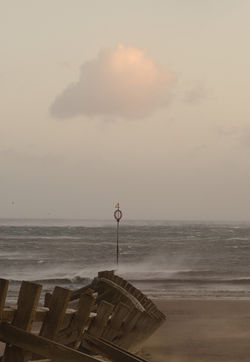 torrent |  the grey head |  courage! |
 mock suns | 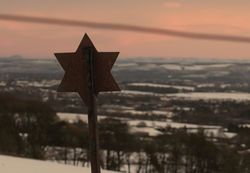 the signpost |  in the village |
 last hope |
Lene by Liesl
Lene by Trude Fleischmann
Lene aloft

Good Night (Gute Nacht)
The Weathervane (Die Wetterfahne)
Frozen Tears (Gefror’ne Thränen)
Feeling Numb (Erstarrung)
The Linden Tree (Der Lindenbaum)
The Watercourse (Wasserfluth)
On the River (Auf dem Flusse)
Looking Back (Rückblick)
Will O’ the Wisp (Irrlicht)
Rest (Rast)
Spring Dreams (Frühlingstraum)
Solitude (Einsamkeit)
The Post (Die Post)
The Grey Head (Der greise Kopf)
The Raven (Die Krähe)
The Last Hope (Letzte Hoffnung)
In the Village (Im Dorfe)
The Stormy Morning (Der stürmische Morgen)
Illusion (Täuschung)
The Guide-Post (Der Wegweiser)
The Wayside Inn (Das Wirthshaus)
Courage (Muth)
The Mock Suns (Die Nebensonnen)
The Hurdy Gurdy Man (Der Leiermann)
Winterreise
Music by Franz Schubert, based on the poems of Wilhelm Müller.
Full series of images inspired by the song cycle now lodged with Villa Beer. For more on the series please get in touch.
